Current Events

  • Irish Chronicles Document Links Between Volcanoes and Weather
    A study of over 40,000 written entries in Irish Annals and ice core measurements shows a strong corr...Read more

    x

    Irish Chronicles Document Links Between Volcanoes and Weather

    A study of over 40,000 written entries in Irish Annals and ice core measurements shows a strong correlation between the occurrence of volcanic eruptions and extreme cold weather in Ireland over a 1200 year period. Data analyzed in this study cover the period from 431 to 1649, during which time up to 48 volcanic eruptions are identified in Greenland ice core records through deposition of volcanic sulfate in annual layers of ice. You can find the study (open access), published on 6 June 2013 in IOP Publishing's journal Environmental Research Letters, at http://iopscience.iop.org/1748-9326/8/2/024035/article. Find out more about how volcanoes can influence climate.
  • EF-5 Tornado in El Reno, Oklahoma Widest Ever Recorded in US
    The EF-5 tornado that hit El Reno, Oklahoma on May 31st was the widest ever recorded in the US, acco...Read more

    x

    EF-5 Tornado in El Reno, Oklahoma Widest Ever Recorded in US

    The EF-5 tornado that hit El Reno, Oklahoma on May 31st was the widest ever recorded in the US, according to the National Weather Service in Norman Oklahoma. The tornado, which remained on the ground for 40 minutes and reached 2.6 miles across (4.2 km), took the lives of 18 people including storm chasers Tim Samaras, Paul Samaras and Carl Young. For more information on the tornado, visit http://ow.ly/i/2hfDG.
  • Atmospheric CO2 Level Tops 400 ppm
    During the week of May 13th, the CO2 level at the Mauna Loa Observatory in Hawaii topped 400 ppm rep...Read more

    x

    Atmospheric CO2 Level Tops 400 ppm

    During the week of May 13th, the CO2 level at the Mauna Loa Observatory in Hawaii topped 400 ppm repeatedly. Daily levels of CO2 can vary due to weather, and there are seasonal trends as well. The level of atmospheric greenhouse gases continues to increase, now over 120 ppm since the Industrial Revolution began. For more on the Keeling Curve, see http://keelingcurve.ucsd.edu/. Find out more about greenhouse gases and warming.
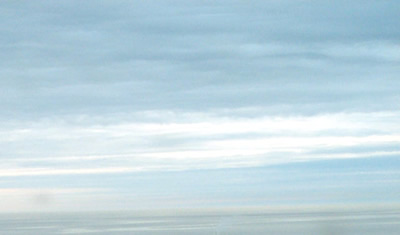
The colorful clouds near the top of this picture are Polar Stratospheric Clouds (PSCs). The PSCs are flying high above the darker cirrus clouds at the bottom of the picture. This photo was taken from a jet airplane.
Click on image for full size
Image courtesy of NASA (Paul Newman, GSFC).

Polar Stratospheric Clouds

The stratosphere is a layer of Earth's atmosphere. We live in the troposphere, the layer below the stratosphere. There are many different kinds of clouds in the troposphere. However, there is only one kind of cloud in the stratosphere! Those clouds are called Polar Stratospheric Clouds (PSCs).

PSCs form at very high altitudes, between 15 and 25 km (about 50,000 to 80,000 feet). PSCs only form at very cold temperatures around -78° C (-108° F). Sometimes, in winter near the North or South Pole, temperatures in the lower stratosphere get that cold. That's when PSCs can form.

There is lots of water vapor in the air in the troposphere. That's why we have lots of clouds down here in the troposphere. The clouds are made of tiny water droplets or small water ice crystals. On the other hand, the stratosphere above us is very, very dry. Clouds are rare in the stratosphere. Some PSCs are made up of water ice crystals. Other PSCs have nitric acid and sulfuric acid in them!

PSCs are also called nacreous clouds. People often see them around sunrise or sunset. Ice crystals in the clouds break sunlight up into different colors. PSCs are often very colorful.

Although they are beautiful, PSCs are also troublemakers. Earth's ozone layer helps protects us from ultraviolet radiation in sunlight. PSCs help out certain chemical reactions that destroy ozone. PSCs are part of the cause of the ozone hole.

PSCs may help warn us about global warming. Global warming is heating up the troposphere (down low, where we live), but it is cooling the stratosphere. That could mean that PSCs, which need really cold temperatures, could form more often. Scientists are watching carefully to see if there are more PSCs than there used to be.
Last modified February 27, 2009 by Randy Russell.

Shop Windows to the Universe Science Store!

Cool It! is the new card game from the Union of Concerned Scientists that teaches kids about the choices we have when it comes to climate change—and how policy and technology decisions made today will matter. Cool It! is available in our online store.

Windows to the Universe Community

News

Opportunities

You might also be interested in:

Cool It! Game

Check out our online store - minerals, fossils, books, activities, jewelry, and household items!...more

How Clouds Form

A cloud is composed of tiny water droplets or ice crystals that are suspended in the air. A series of processes have to happen in order for these water droplets or ice crystals to form into clouds in the...more

Nitric Acid - HNO3

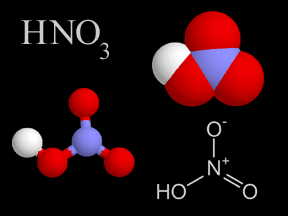
Nitric acid is a very strong acid that can burn your skin. Nitric acid has nitrogen, oxygen, and hydrogen atoms in it. There is a very tiny bit of nitric acid gas in Earth's atmosphere. Nitric acid is...more

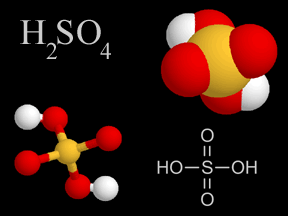
Sulfuric Acid - H2SO4

Sulfuric acid is a very common type of acid. Acid rain has sulfuric acid in it. Acid rain harms plants, fish, and other living things. A type of air pollution causes acid rain. When people burn fossil...more

Ozone in the Stratosphere

About 90% of the ozone in the Earth's atmosphere is found in the region called the stratosphere. This is the atmospheric layer between 16 and 48 kilometers (10 and 30 miles) above the Earth's surface....more

Global Warming: Scientists Say Earth Is Heating Up

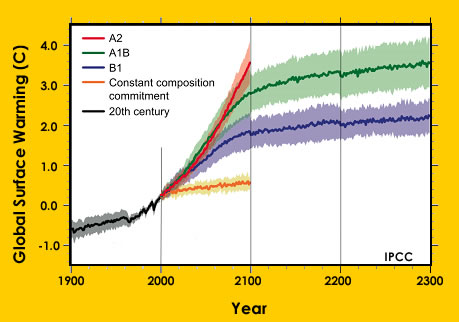
Earth’s climate is warming. During the 20th Century Earth’s average temperature rose 0.6° Celsius (1.1°F). Scientists are finding that the change in temperature has been causing other aspects of our planet...more

Altocumulus

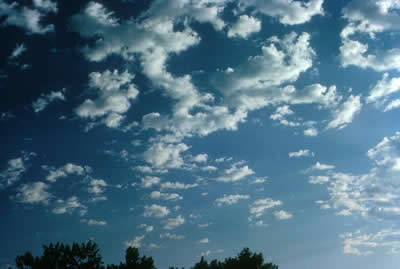
Altocumulus clouds are part of the Middle Cloud group (2000-7000m up). They are grayish-white with one part of the cloud darker than the other. Altocumulus clouds usually form in groups and are about...more

Altostratus

Altostratus belong to the Middle Cloud group (2000-7000m up). An altostratus cloud usually covers the whole sky and has a gray or blue-gray appearance. The sun or moon may shine through an altostratus...more

Shop Windows to the Universe

The Spring 2011 issue of The Earth Scientist is focused on modernizing seismology education. Thanks to IRIS, you can download this issue for free as a pdf. Print copies are available in our online store.

Windows to the Universe, a project of the National Earth Science Teachers Association, is sponsored in part by the National Science Foundation and NASA, our Founding Partners (the American Geophysical Union and American Geosciences Institute) as well as through Institutional, Contributing, and Affiliate Partners, individual memberships and generous donors. Thank you for your support! NASA AGU AGI NSF