Current Events

  • Atmospheric CO2 Level Tops 400 ppm
    During the week of May 13th, the CO2 level at the Mauna Loa Observatory in Hawaii topped 400 ppm rep...Read more

    x

    Atmospheric CO2 Level Tops 400 ppm

    During the week of May 13th, the CO2 level at the Mauna Loa Observatory in Hawaii topped 400 ppm repeatedly. Daily levels of CO2 can vary due to weather, and there are seasonal trends as well. The level of atmospheric greenhouse gases continues to increase, now over 120 ppm since the Industrial Revolution began. For more on the Keeling Curve, see http://keelingcurve.ucsd.edu/. Find out more about greenhouse gases and warming.
  • Massive Tornado Outbreak on Tornado Alley
    The week of May 19 brings dozens of tornadoes to Tornado Alley in the states of Oklahoma, Kansas, Io...Read more

    x

    Massive Tornado Outbreak on Tornado Alley

    The week of May 19 brings dozens of tornadoes to Tornado Alley in the states of Oklahoma, Kansas, Iowa, Illinois and Missouri. On May 20th, a massive tornado struck Moore, Oklahoma, devastating communities - destroying over 100 homes and hitting two elementary schools and a hospital - with many casualties and deaths. Our thoughts are with our friends and colleagues suffering from these storms. For more on the May 20th storms, see the NOAA Storm Prediction Center Storm Report.
  • Kansas Legislator Proposes Bill to Outlaw Sustainability Education
    A bill has been introduced in the Kansas legislature this week that would prohibit the promotion of ...Read more

    x

    Kansas Legislator Proposes Bill to Outlaw Sustainability Education

    A bill has been introduced in the Kansas legislature this week that would prohibit the promotion of sustainability. Here is a link to the one-page bill: http://www.kslegislature.org/li/b2013_14/measures/documents/hb2366_00_0000.pdf. See report on Bloomberg News.
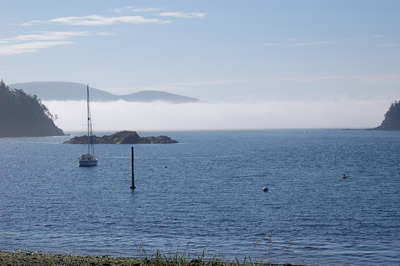
Fog over ocean water. The low-lying fog is within the atmospheric boundary layer.
Click on image for full size
Image Courtesy of Amy Hatheway

Boundary Layer (Earth's Atmosphere)

The lowest part of the troposphere, closest to Earth's surface, is called the "boundary layer" (or planetary boundary layer or atmospheric boundary layer). Near the surface, the texture of the ground has a strong influence on the movement of winds. Higher up, above the boundary layer, wind speed is much less affected by the details of the surface below. As you might expect, different surfaces have more or less influence on wind flow, so the thickness of this boundary layer varies. The boundary layer is quite thin over smooth water or ice, and much thicker over hilly, tree-covered, or urban terrains with many large buildings. The boundary layer typically extends upward about 200 to 500 meters (650 to 1,640 feet), but can be as thin as 50 meters (164 feet) or as deep as 2 km (6,562 feet). The depth of the boundary layer also tends to vary with latitude. Like the thickness of the troposphere as a whole, the depth of the boundary layer is usually greatest in the tropics and least near the poles.

Last modified July 27, 2009 by Randy Russell.

Shop Windows to the Universe Science Store!

Cool It! is the new card game from the Union of Concerned Scientists that teaches kids about the choices we have when it comes to climate change—and how policy and technology decisions made today will matter. Cool It! is available in our online store.

Windows to the Universe Community

News

Opportunities

You might also be interested in:

Cool It! Game

Check out our online store - minerals, fossils, books, activities, jewelry, and household items!...more

Wind

Wind is moving air. Warm air rises, and cool air comes in to take its place. This movement creates different pressures in the atmosphere which creates the winds around the globe. Since the Earth spins,...more

Rainbows

Rainbows appear in the sky when there is bright sunlight and rain. Sunlight is known as visible or white light and is actually a mixture of colors. Rainbows result from the refraction and reflection of...more

The Four Seasons

The Earth travels around the sun one full time per year. During this year, the seasons change depending on the amount of sunlight reaching the surface and the Earth's tilt as it revolves around the sun....more

Research Aircraft

Scientists sometimes travel in specially outfitted airplanes in order to gather data about atmospheric conditions. These research aircraft have special inlet ports that bring air from the outside into...more

Anemometer

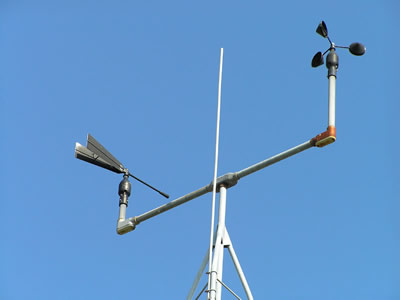
An anemometer is a weather instrument used to measure the wind (it can also be called a wind gauge). Anemometers can measure wind speed, wind direction, and other information like the largest gust of wind...more

Thermometer

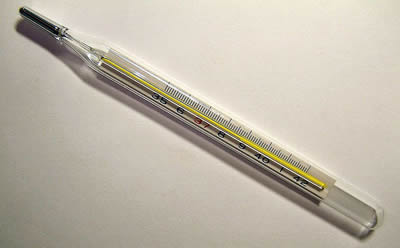
Thermometers measure temperature. "Thermo" means heat and "meter" means to measure. You can use a thermometer to measure the temperature of many things, including the temperature of...more

Weather Balloons

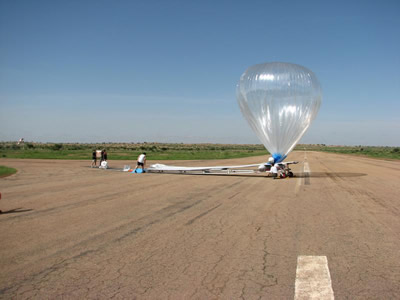
Weather balloons are used to carry weather instruments that measure temperature, pressure, humidity, and winds in the lowest few miles of the atmosphere. The balloons are made of rubber and weigh up to...more

Shop Windows to the Universe

We now offer the Cool It! card game in our Science Store. Cool It! is the new card game from UCS that teaches kids about the choices we have when it comes to climate change.

Windows to the Universe, a project of the National Earth Science Teachers Association, is sponsored in part by the National Science Foundation and NASA, our Founding Partners (the American Geophysical Union and American Geosciences Institute) as well as through Institutional, Contributing, and Affiliate Partners, individual memberships and generous donors. Thank you for your support! NASA AGU AGI NSF