Current Events

  • Atmospheric CO2 Level Tops 400 ppm
    During the week of May 13th, the CO2 level at the Mauna Loa Observatory in Hawaii topped 400 ppm rep...Read more

    x

    Atmospheric CO2 Level Tops 400 ppm

    During the week of May 13th, the CO2 level at the Mauna Loa Observatory in Hawaii topped 400 ppm repeatedly. Daily levels of CO2 can vary due to weather, and there are seasonal trends as well. The level of atmospheric greenhouse gases continues to increase, now over 120 ppm since the Industrial Revolution began. For more on the Keeling Curve, see http://keelingcurve.ucsd.edu/. Find out more about greenhouse gases and warming.
  • Massive Tornado Outbreak on Tornado Alley
    The week of May 19 brings dozens of tornadoes to Tornado Alley in the states of Oklahoma, Kansas, Io...Read more

    x

    Massive Tornado Outbreak on Tornado Alley

    The week of May 19 brings dozens of tornadoes to Tornado Alley in the states of Oklahoma, Kansas, Iowa, Illinois and Missouri. On May 20th, a massive tornado struck Moore, Oklahoma, devastating communities - destroying over 100 homes and hitting two elementary schools and a hospital - with many casualties and deaths. Our thoughts are with our friends and colleagues suffering from these storms. For more on the May 20th storms, see the NOAA Storm Prediction Center Storm Report.
  • Kansas Legislator Proposes Bill to Outlaw Sustainability Education
    A bill has been introduced in the Kansas legislature this week that would prohibit the promotion of ...Read more

    x

    Kansas Legislator Proposes Bill to Outlaw Sustainability Education

    A bill has been introduced in the Kansas legislature this week that would prohibit the promotion of sustainability. Here is a link to the one-page bill: http://www.kslegislature.org/li/b2013_14/measures/documents/hb2366_00_0000.pdf. See report on Bloomberg News.

You might also be interested in:

ExploraTour: A Peek into the Lives of the Stars

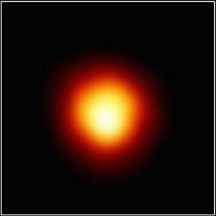
This is an image of the supergiant star, Betelgeuse, taken by the Hubble Space Telescope. Betelgeuse is in the constellation of Orion, a familiar site from the Northern Hemisphere. But look closely at...more

ExploraTour: A Peek into the Lives of the Stars

You can sense a star's temperature -- not with your fingers, but with your eyes! The color of the star tells you how hot it is. Have you ever looked inside the toaster as the wires heat up to make your...more

ExploraTour: A Peek into the Lives of the Stars

The wire is a black body. Anything that absorbs all the radiant energy (heat and light), that strikes it, is a black body. Your black baseball cap on a hot summer day is a good example. All of the sunlight...more

ExploraTour: A Peek into the Lives of the Stars

It definitely is not black. Almost all of the photons of light that the sun produces in its core are absorbed by the sun's thin outer layer, the photosphere. Because it absorbs all the radiation that...more

ExploraTour: A Peek into the Lives of the Stars

When we apply this to stars, we find out a lot of interesting things about them. By observing the color of a star, we can figure out its temperature. If we know how far away the star is, we can calculate...more

ExploraTour: A Peek into the Lives of the Stars

Two scientists, Hertzsprung and Russell, used these very interesting properties of stars. They arranged stars on a chart according to their color and brightness. This chart is called the Hertzsprung-Russell...more

ExploraTour: A Peek into the Lives of the Stars

A great number of stars were arranged on this chart according to how bright and how hot they are. On this plot you do not see all of the individual stars. Large numbers of stars were actually scattered...more

ExploraTour: A Peek into the Lives of the Stars

New stars are formed in vast clouds of gas and dust that occupy the space between stars. If you're picturing a dense fog cloud, think again. Typically in a cloud with 1 gas atom per cubic centimeter,...more

Shop Windows to the Universe

Please help support Windows to the Universe, and our activities to help Earth and space science teachers, with a tax-exempt donation today!

Windows to the Universe, a project of the National Earth Science Teachers Association, is sponsored in part by the National Science Foundation and NASA, our Founding Partners (the American Geophysical Union and American Geosciences Institute) as well as through Institutional, Contributing, and Affiliate Partners, individual memberships and generous donors. Thank you for your support! NASA AGU AGI NSF